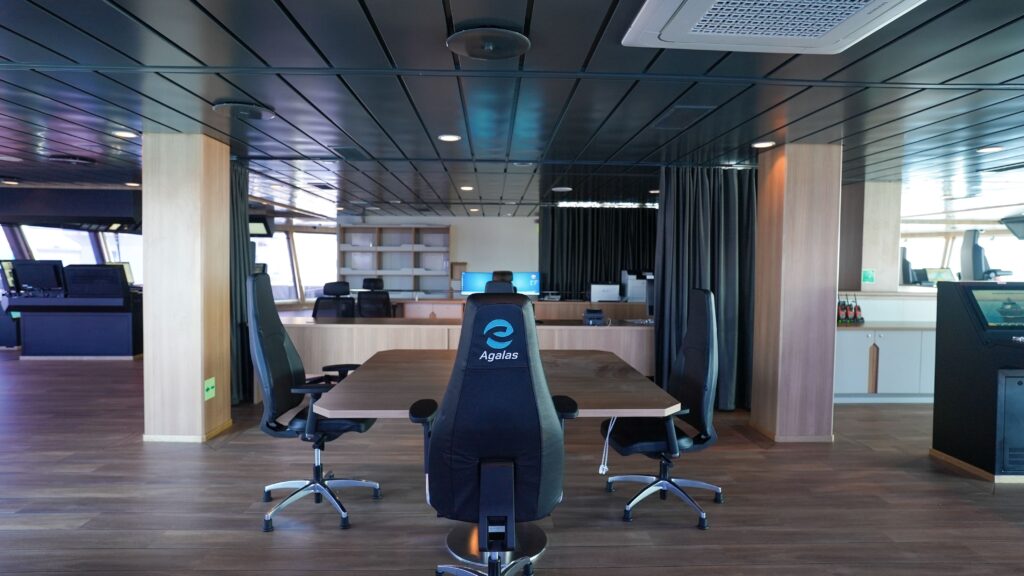
IMO-Compliant Materials for Yacht and Ship Interiors



Material selection for a ship or yacht interior involves more than appearance, durability and maintenance. Depending on the vessel’s flag, the product category and its intended application, materials may also need to meet specific marine fire-safety and conformity requirements.
For equipment installed on ships flying the flag of an EU Member State, MED Wheelmark certification can form an important part of that regulatory framework. The Wheelmark identifies products that fall within the scope of the European Union’s Marine Equipment Directive and have completed the applicable conformity assessment procedure.
This distinction matters in marine outfitting because some surface materials, floor coverings, curtains, upholstery systems and bedding components may fall within MED fire-protection categories. Confirming the correct approval before procurement helps shipyards, designers and contractors avoid late substitutions, production delays and incomplete handover documentation.
What Is the Marine Equipment Directive?
The Marine Equipment Directive, usually abbreviated as MED, establishes the EU framework for specified equipment placed or intended to be placed on board EU-flagged ships. Directive 2014/90/EU sets out the core legal requirements, including conformity assessment, the responsibilities of manufacturers and other economic operators, and the use of the Wheelmark.
MED works alongside international maritime instruments rather than replacing them. Its technical requirements draw on conventions and standards adopted through bodies such as the International Maritime Organization, including SOLAS and the IMO Fire Test Procedures Code.
The detailed list of covered equipment and applicable testing standards is updated through Commission implementing regulations. As of September 2026, Commission Implementing Regulation EU 2026/1434 is the current implementing regulation. It applies from 31 August 2026 and repeals Implementing Regulation EU 2025/1533.
Because the equipment list and referenced standards can change, project teams should check the regulation applicable at the time of procurement rather than rely on an old certificate list or a previous vessel specification.
What Does the Wheelmark Mean?
The Wheelmark is the conformity marking used for marine equipment covered by MED. A manufacturer may apply it after the product has completed the conformity assessment route required for its category and the manufacturer has drawn up the EU Declaration of Conformity.
The marking normally appears with the identification number of the notified body involved in production control and the last two digits of the year in which the mark was affixed. These details help connect the physical product with its supporting approval documents.
The Wheelmark does not mean that a product is approved for every marine application. Its value depends on the exact manufacturer, product designation, tested configuration, certificate scope and intended use. A material that is approved as part of one construction may not remain covered when its substrate, adhesive, coating, thickness or assembly changes.
The Wheelmark should also not be confused with the CE mark. CE marking applies to many product groups placed on the European Economic Area market, while the Wheelmark is specifically used for marine equipment within the scope of MED.
Is MED Wheelmark Certification the Same as IMO Compliance?
No. MED and IMO requirements are connected, but they do not describe the same approval system. IMO develops international maritime safety instruments and testing procedures. MED uses relevant international requirements within an EU conformity assessment framework for equipment installed on EU-flagged ships.
A product may therefore have an IMO FTP Code test report without being Wheelmark-approved. If the product falls within a MED category for the proposed application, the project team must also establish whether the required MED conformity assessment and documentation are in place.
Broad descriptions such as “marine approved,” “fire resistant” or “IMO tested” are not sufficient evidence on their own. Procurement teams should review the actual certificate and declaration, then confirm that the supplied product and intended application match the documented scope.
Which Marine Interior Materials May Fall Under MED?
Not every product used inside a vessel requires a Wheelmark. Applicability depends on the current MED equipment list, the vessel, the installation location and the product’s intended function. The flag Administration, recognised organisation, shipyard and project specification may also affect the documents required for acceptance.
The following groups are especially relevant to marine interior projects.
Decorative Veneers and Surface Materials
Decorative veneers, laminates and surface finishes are used throughout cabins, corridors, lounges and public areas. Some products may fall within MED fire-protection categories associated with low flame-spread performance and related IMO FTP Code requirements.
Approval should be checked against the complete tested configuration. Changing the decorative layer, coating, adhesive or substrate may place the proposed construction outside the certificate scope, even when the visible finish appears similar.
Floor Coverings
Marine flooring must meet operational requirements for wear, cleaning and durability. Certain floor coverings may also be subject to fire-performance requirements under MED, depending on their application.
The technical review should cover the specified product, backing, adhesive and installation build-up where these form part of the approved configuration. A replacement chosen because of stock or delivery constraints should undergo the same review before installation.
Curtains and Suspended Textiles
Curtains, draperies and other suspended textile materials can influence flame spread inside accommodation and passenger spaces. Products within an applicable MED category may need to demonstrate conformity with the relevant SOLAS and IMO FTP Code requirements.
Textile selection should therefore consider certification alongside colour, texture, maintenance and durability. The supplied colourway or product reference should match the approval documents when the certificate contains such limitations.
Upholstered Furniture Components
The fire performance of an upholstered item may depend on the combination of its covering material, foam, filling and construction. Approval of an outer fabric does not automatically prove that every seat or sofa made with that fabric is covered.
Before serial production, the contractor should confirm whether the certificate applies to the proposed component or complete upholstery assembly. This is particularly important when the same construction will be repeated across cabins or public areas.
Bedding Components
Mattresses and related bedding products used in sleeping accommodation may also fall within MED fire-protection categories. Procurement records should identify the exact product and retain the documentation required by the vessel specification and approval authorities.
Why MED Wheelmark Certification Matters Before Production
Material approval has the greatest value when it is resolved before purchasing and manufacturing begin. Discovering that a selected finish or upholstery system lacks the required approval after production has started can lead to replacement costs, redesign, delayed inspections and rework.
Early consulting and planning allows the project team to connect the interior specification with vessel requirements, procurement lead times and production release dates. It also creates a controlled point at which proposed equivalents and substitutions can be reviewed before they affect repeated furniture units.
The objective is not to collect certificates as a separate administrative exercise. The documentation must remain connected to the product that is purchased, manufactured and installed.
Which Documents Should Be Checked?

A Wheelmark symbol on a label is not enough by itself. Depending on the product and conformity route, the material approval file may include:
- EU Declaration of Conformity
- EU type-examination certificate
- Notified body name and identification number
- Manufacturer and exact product identification
- Applicable MED item number
- Referenced testing standards
- Approved construction, thickness or product configuration
- Production conformity documentation
- Application limitations and certificate validity information
Names, model numbers and technical descriptions should correspond across the certificate, declaration, product data sheet, purchase order and delivered material. Any mismatch should be resolved before the product is released to production.
This traceability becomes more important in serial accommodation projects. A documentation error affecting one finish, foam or textile may otherwise be repeated across a large number of cabins or furniture modules.
How Does the MED Conformity Assessment Process Work?
The required conformity route depends on the equipment category listed in the applicable implementing regulation. For a number of fire-protection products, the permitted routes include combinations such as B+D, B+E or B+F.
- Module B – EU type-examination: A notified body examines the technical design and determines whether the product type meets the applicable requirements.
- Module D – Conformity to type based on production quality assurance: The notified body assesses and monitors the manufacturer’s quality system for production and related final inspection.
- Module E – Conformity to type based on product quality assurance: The assessment focuses on the quality system used for final product inspection and testing.
- Module F – Conformity to type based on product verification: A notified body examines and tests products to verify conformity with the approved type.
The manufacturer is responsible for completing the required procedure, preparing the EU Declaration of Conformity and applying the Wheelmark. The shipyard or contractor does not issue the approval. Its procurement responsibility is to verify that the supplied product is covered by the correct documentation for the intended application.
How to Check a Wheelmark-Approved Material Before Procurement
1. Identify the Exact Product
Record the manufacturer, product name, model or reference number, construction and intended application. Generic product-family names are rarely enough for a reliable approval check.
2. Confirm Whether MED Applies
Check whether the product category appears in the current MED equipment list and whether the vessel and proposed application are subject to the relevant requirement. Confirm the basis with the flag Administration, recognised organisation or project approval authority where necessary.
3. Review the Certificate Scope
Verify that the certificate covers the exact product, construction and use. Pay attention to limitations concerning thickness, substrates, adhesives, coatings, colours or installation orientation.
4. Match the Certificate to the Delivered Material
Compare the documentation with labels, packaging, batch information and product data sheets. The material received by the project should be identifiable as the approved product.
5. Check the Notified Body Details
Confirm that the notified body information shown on the certificate and marking is relevant to the applicable conformity route. The Wheelmark and accompanying identification details should be consistent with the supplied documents.
6. Record Project Acceptance Requirements
The vessel specification, shipyard, owner, flag Administration or classification society may require submissions beyond the core MED documents. Define these requirements before issuing the purchase order.
7. Reassess Every Substitution
A change in supplier, product reference, substrate, finish, adhesive, foam or upholstery combination should trigger a technical review. Visual similarity and equivalent commercial performance do not establish equivalent approval.
MED Requirements in Marine Furniture Production

Marine furniture production must maintain the link between approved materials and the units in which they are used. Material schedules, purchase records, sample approvals and production instructions should identify the approved product clearly enough to prevent uncontrolled substitutions.
This control is particularly important for modular cabin furniture and repeated accommodation packages. The same laminate, textile or upholstery assembly may be used in many rooms, so one undocumented change can affect a large production batch.
An integrated development and production process can connect approved technical information with material purchasing, prototypes, production releases and quality checks. The approval file should then be updated through the same controlled route whenever a material or construction changes.
MED Wheelmark Certification in Newbuild and Refit Projects
In a newbuild project, MED requirements can usually be incorporated into the material specification before purchasing begins. This gives the project team time to align certification, samples, production releases and installation planning.
Refit projects may require a different approach. Existing material records can be incomplete, and a visually matching replacement may have a different construction or approval scope. Short procurement windows also increase the risk of selecting a readily available product before its technical documents have been checked.
In both cases, the review should start with the vessel’s regulatory basis and the intended application. Previous use on another vessel is useful project experience, but it does not replace approval for the current product and installation.
Common Wheelmark Procurement Mistakes
Project teams can reduce approval and production risk by avoiding several recurring mistakes:
- Accepting “IMO tested” as proof of MED conformity
- Checking the product family but not the exact model or construction
- Reviewing the visible finish without checking the substrate and adhesive
- Assuming that every colour or thickness is covered by the same certificate
- Accepting a substitution before comparing its approval scope
- Failing to match delivered labels and batch information with the documentation
- Treating certificate collection as a handover task rather than a pre-production requirement
A simple compliance matrix can make these checks easier to manage. For each material, record its intended location, MED item where applicable, certificate reference, declaration, limitations, approval status and approved substitute.
Frequently Asked Questions About MED Wheelmark Certification
What is MED Wheelmark certification?
It is the conformity assessment and marking framework established under the EU Marine Equipment Directive. Equipment covered by MED may carry the Wheelmark after completing the required assessment procedure.
Is the Wheelmark issued by the IMO?
No. The Wheelmark belongs to the EU MED framework. IMO develops many of the international safety requirements and test procedures referenced by MED, but it does not issue the Wheelmark.
Does every material used on a ship require a Wheelmark?
No. MED applies only to products and equipment categories within its scope. Applicability depends on the product, vessel, intended use and current regulatory requirements.
Which interior products may require MED approval?
Depending on the applicable category and installation, examples may include certain surface materials, floor coverings, suspended textiles, upholstery components and bedding products.
Is an IMO FTP Code test report enough?
Not always. A test report may demonstrate performance against a referenced test procedure, but a product within MED scope may also require the applicable conformity assessment, certificate and EU Declaration of Conformity.
What should be checked before purchasing a Wheelmark-approved product?
Verify the exact product identity, certificate scope, EU Declaration of Conformity, notified body details, referenced standards, marking information and intended use. Review any substitution before purchase or production release.
MED Wheelmark certification should be treated as a product- and application-specific conformity requirement, not as a general description of marine quality. Early document review, controlled substitutions and traceability through production help protect both compliance and the vessel programme.
Cita supports shipyards and vessel teams with material coordination, technical development and production planning for newbuild and refit interiors. Share the vessel type, flag, application area, proposed materials and available approval documents to establish the technical review scope before production begins.