Marine Interior Refit & Refurbishment: How to Minimize Vessel Downtime


Selecting a marine outfitting contractor is one of the highest-impact commercial decisions in a newbuild or refit interior project. The selected partner affects technical coordination, production readiness, material approvals, manufacturing quality, logistics, onboard access, installation sequencing and punch-list closure. A low initial bid can become costly when responsibilities are unclear or the delivery model cannot protect the vessel schedule.
Shipyards and shipowners should therefore compare execution capability as carefully as price. The right marine outfitting company should be able to turn design intent into buildable information, coordinate interfaces with other trades, manage production and procurement, deliver by installation sequence and close the agreed scope onboard.
Cita Marine Furniture supports newbuild and refit projects through an integrated marine outfitting workflow covering planning, technical development, production, logistics and onboard assembly support.
Define the Scope Before Comparing Contractors
The selection process should begin by defining exactly what the contractor is expected to deliver. Bids cannot be compared fairly when one quotation includes drawings, furniture, logistics, installation and punch-list work while another covers manufacturing only.
Prepare a responsibility matrix covering architectural development, surveys, shop drawings, material procurement, fixed and loose furniture, bespoke joinery, mock-ups, packing, freight, onboard installation, supervision, protection, consumables, final adjustments, spares and closeout documentation. The same matrix should assign interfaces with wall panels, ceilings, flooring, HVAC, electrical systems, plumbing, doors, insulation and shipyard-supplied items.
Every bidder should price and qualify the same baseline. Exclusions, assumptions and owner- or shipyard-supplied items should be visible before commercial comparison begins.
1. Review Relevant Marine Project Experience
A ship interior contractor should demonstrate experience with vessel types and scopes comparable to the project. Land-based furniture experience alone does not prove capability in marine access, fire-safety, weight, documentation, installation and trade-interface constraints.
Request references that are relevant to the planned accommodation, cabin, crew-space, public-area or technical-furniture scope. For each reference, establish what the contractor actually supplied, where the work was performed, whether production and installation were both included and how final completion was managed. Project names without a defined responsibility do not provide enough evidence.
2. Evaluate Planning and Technical Development Capability
A capable contractor should identify buildability and interface issues before production begins. Interior concepts must be converted into coordinated layouts, sections, details, material schedules, fixing details, access provisions and manufacturing information. Ask how drawing comments, revision status, approval cycles and room-by-room interfaces are controlled.
This capability is especially important in refit projects, where surveyed conditions may differ from available drawings. In newbuild projects, early technical coordination helps prevent late conflicts between interior modules and ship systems.
Cita’s Consulting & Planning approach connects production-ready layouts, feasibility, material planning and sequencing with manufacturing and onboard requirements.
3. Check Production Capacity and Manufacturing Control
A strong design team cannot compensate for insufficient production capacity. Ask how production load is forecast, how furniture batches are released, how long-lead materials are monitored and how approved revisions reach the workshop. The contractor should also explain how progress is reported and how recovery plans are prepared when vessel milestones change.
Cita operates with more than 10,000 square metres of indoor production space and a skilled workforce of more than 500 people trained for marine projects. Its development and production process connects approved technical information with prototyping, CNC-supported manufacturing, serial production and in-process quality checks.
4. Understand the Quality-Control Method
Contractor evaluation should examine the actual inspection process rather than accept a generic quality statement. Ask how dimensions, visible finishes, hardware, labelling, packaging and room-specific requirements are checked. Request sample inspection records, first-off approval procedures and examples of non-conformity management.
For repeated cabins and modular furniture, the control plan should prevent one error from being reproduced across an entire batch. Bespoke areas may require project-specific hold points and client approvals. Clarify who can release production after the first unit and how approved samples are protected as the reference standard.
5. Assess Material and Supplier Management
Marine outfitting relies on finishes, panels, hardware and specialist items with different approval and lead-time requirements. The contractor should demonstrate how approved materials are reserved, substitutions are controlled, required certificates and project documents are collected and shortages are escalated before they affect production.
Refit schedules often leave little time to recover from a late material decision. Newbuild programmes may provide more planning time, but repeated accommodation volumes increase the effect of any supply interruption. Procurement planning should therefore be reviewed as a delivery capability, not only as a purchasing activity.
6. Test Logistics and Packaging Capability
Completed furniture can be damaged during transport, staging and repeated handling. Packaging should protect visible surfaces while allowing every package to be traced to its deck, zone, cabin or installation activity. Delivery sequencing should follow the onboard workfront rather than factory completion alone.
For international projects, clarify responsibility for freight planning, customs documents, port or shipyard delivery, unloading coordination, temporary storage, shipment tracking and damage reporting. Ask to see an example packing list and labelling convention from a comparable project.
7. Evaluate Onboard Installation and Site Management
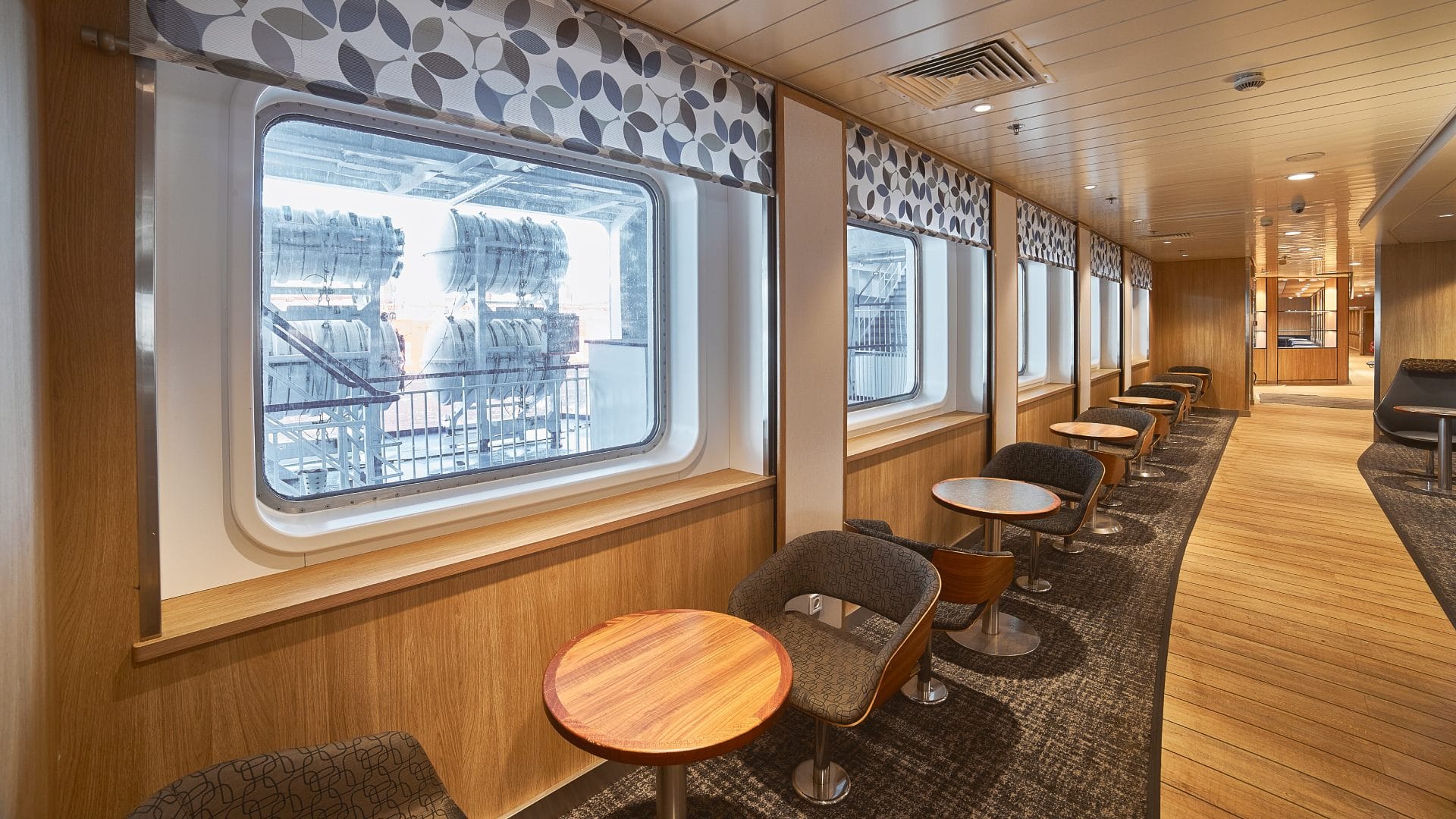 Onboard installation is not simply furniture assembly. Site teams must coordinate access, room readiness, permits, material movement, protection, inspections, other subcontractors and changing work priorities. Installation resources should be scalable to the available workfront rather than based only on the overall project volume.
Ask who provides site supervision, how daily progress is measured and how missing, damaged or non-fitting items are handled. Responsibility for tools, consumables, touch-up work, protection, cleaning and final adjustment should be stated in the tender. Cita’s Assembly Support covers onboard supervision, installation coordination, quality checks and cooperation with shipyard teams.
8. Review Change Management and Commercial Transparency
Newbuild and refit projects both change. The key selection question is how those changes are controlled. A disciplined contractor should identify the technical, material, cost, schedule and installation impact before revised work is released. Each approved change should follow a documented route into drawings, procurement actions, production instructions and site information.
Commercial terms should define the baseline scope, exclusions, optional items, variation rates, supervision, installation, freight, accommodation, consumables, spares and closeout work. Clarify the quotation validity period and the process for approving changes. Broad or ambiguous exclusions can make a low initial price difficult to manage later.
9. Compare Newbuild and Refit Strengths Separately
A contractor may be experienced in serial newbuild production but less prepared for a fast-turnaround refit, or the reverse. Newbuild projects reward repeatable production, milestone control and coordination with ship construction. Refit projects require rapid surveys, adaptation to as-built conditions, short procurement cycles, controlled demolition interfaces and quick onboard decisions.
If the same contractor is being considered for both project types, request evidence of both. The technical team, project controls, production strategy and site-management model may need to change significantly between a newbuild and a refit.
| Evaluation area | Newbuild priority | Refit priority |
|---|---|---|
| Technical planning | Production-ready information and interface coordination | Accurate surveys and rapid adaptation to as-built conditions |
| Production | Repeatability, batch control and milestone capacity | Flexible manufacturing and short response times |
| Procurement | Long-lead planning and volume continuity | Immediate availability and fast approvals |
| Logistics | Delivery by deck, zone and installation sequence | Restricted access, staging and short delivery windows |
| Site management | Coordination with construction milestones | Rapid decisions and changing onboard conditions |
10. Define Punch-List and Handover Responsibility
Contractor selection should extend through the final project stage. The tender should state who records punch items, coordinates corrections, expedites replacements and compiles completion documentation. The package is complete only when the agreed open items are closed and the required handover information has been delivered.
Weighted Contractor Evaluation Matrix
Use a weighted matrix to compare compliant bids on the same basis. The following distribution can be adjusted to suit the vessel type, project phase and risk profile.
| Evaluation criterion | Suggested weighting |
|---|---|
| Comparable marine project experience | 15% |
| Planning and technical development | 20% |
| Production capacity and quality control | 20% |
| Logistics and onboard execution | 15% |
| Change and risk management | 15% |
| Commercial clarity and price | 15% |
For a fast refit, the weighting assigned to surveys, onboard resources and change response may be increased. For a multi-vessel newbuild programme, production capacity, repeatability and schedule control may carry more weight. Score commercial price only after scope gaps and exclusions have been normalised.
Questions to Ask During Tender Clarification
- Can you provide references with a scope and vessel type comparable to this project?
- Which drawings, surveys, calculations and material documents are included in your responsibility?
- How are comments, revisions and approvals communicated from the technical team to production and installation?
- Which materials or hardware have the longest lead times, and when must they be released?
- How will production and delivery status be reported against vessel milestones?
- How are packages labelled and sequenced for deck-, zone- or cabin-based installation?
- Who will lead the onboard team, and how can manpower be adjusted when workfronts change?
- How are variations, non-conformities, damaged items and punch-list replacements managed?
Marine Outfitting Contractor Selection Checklist
- Scope clarity: Are design, production, logistics, installation and closeout responsibilities assigned?
- Relevant references: Has the contractor completed comparable vessel types and interior scopes?
- Planning capability: Can concepts and surveys be converted into coordinated, buildable information?
- Production capacity: Can the required volume and overlapping milestones be managed?
- Quality control: Are inspection points, traceability and non-conformity processes defined?
- Material management: Can approved finishes and long-lead items be secured on time?
- Logistics: Can packaging and deliveries follow the vessel installation sequence?
- Site capability: Are suitable supervisors and installation resources available at the project location?
- Change control: Is the route for technical, cost and schedule changes documented?
- Closeout: Who owns punch-list closure, replacements, spares and completion documents?
Red Flags When Selecting a Marine Fit-Out Contractor
Warning signs include broad exclusions, unclear drawing responsibility, no revision-control process, unsupported production dates, weak packaging plans, vague installation responsibility and no documented approach to punch-list closure. A bidder that cannot explain how information moves from planning to production and then onboard may create interface risk even when its price is attractive.
Another warning sign is treating every vessel project in the same way. Newbuild and refit work require different survey, planning, manufacturing and site-management responses. The bidder should be able to explain how its execution model changes with project type and schedule.
Why an Integrated Contractor Can Reduce Interface Risk
An integrated contractor model can reduce interface risk when responsibilities, communication routes and project controls are clearly defined. Cita Marine Furniture combines planning, technical development, production, bespoke joinery, logistics and onboard assembly support within a coordinated marine workflow. Its experience covers both newbuild and refit projects across different vessel types.
For shipyards and shipowners, fewer handoffs between drawing development, furniture production, packing, shipment and onboard installation can make responsibility easier to trace when a technical or schedule issue arises. Integration should still be tested through relevant references, named responsibilities, reporting methods and a project-specific execution plan.
Select the Contractor Around Execution Capability, Not Only Price
The right marine outfitting contractor should give the project team confidence in execution: clear technical responsibility, realistic planning, controlled production, traceable quality, sequenced logistics, capable onboard teams and transparent change management. Price remains important, but it should be compared only after every bidder has responded to the same scope and delivery responsibilities.
Cita Marine Furniture can support newbuild and refit teams from early planning through production, logistics and onboard assembly. Share the vessel type, interior scope, available drawings, milestone dates, project location and installation responsibilities to establish a clear technical and commercial baseline.
Discuss your newbuild or refit outfitting scope with Cita Marine Furniture.