How to Select a Marine Outfitting Contractor for Newbuild and Refit Projects



Wood remains central to yacht and ship interiors. It is used in cabinetry, furniture, wall panels, storage systems and bespoke joinery because it combines practical versatility with a warm, natural finish. Yet appearance and performance are no longer the only considerations. Shipowners, shipyards, designers and contractors increasingly want clearer information about where forest-based materials come from and how they move through the supply chain.
FSC-certified wood provides a recognised framework for responsible sourcing and traceability. For a marine interior project, however, specifying FSC-certified material is only one part of the decision. The selected timber, panel or veneer must also satisfy the fire, moisture, durability, weight and documentation requirements of its intended onboard application.
Understanding this distinction helps project teams set realistic specifications, compare suppliers and avoid unsupported sustainability claims.
What Is FSC-Certified Wood?
FSC stands for the Forest Stewardship Council, an international organisation that operates a certification system for responsibly managed forests and forest-based supply chains. The system includes forest management certification at source and Chain of Custody certification for organisations that process, manufacture or trade products carrying FSC claims.
FSC product claims are not all identical. Depending on the eligible inputs and the applicable certification rules, a product may be identified as FSC 100%, FSC Recycled or FSC Mix. For example, FSC Mix products can contain material from FSC-certified forests, recycled sources and/or FSC Controlled Wood. Procurement documents should therefore state the exact claim required rather than using “FSC-certified” as a general description.
There is also an important difference between using an FSC-certified input and supplying a finished item with an FSC claim. Purchasing certified board or timber does not automatically allow every organisation further along the chain to market the finished furniture or joinery as FSC certified. Where the final product is required to carry an FSC claim, the relevant supply-chain controls, certification scope and sales documentation must support that claim.
For an overview of how certified material is controlled between organisations, see the Forest Stewardship Council’s official Chain of Custody guidance.
Why FSC Chain of Custody Matters
Marine furniture rarely moves directly from a forest to a vessel. Timber may be processed into panels, faced with veneer, distributed by a merchant and then converted into cabinetry or furniture by another manufacturer. Each stage can affect whether the original FSC claim remains valid and traceable.
FSC Chain of Custody, usually abbreviated as CoC, provides the framework used by certified organisations to identify eligible material, separate or control it where required and pass the correct claim through transaction documents. This makes the paperwork as important as the physical material.
For a shipyard or owner, practical verification should include the supplier’s current certificate status, the scope of that certificate, the product description and the FSC claim shown on the relevant invoice or delivery documentation. A logo on a brochure, a certificate supplied without context or a general statement on a website is not enough to verify a specific purchase.
Why Responsible Wood Sourcing Matters in Marine Interiors
Marine interiors can contain substantial volumes of wood-based material across cabins, public spaces, crew accommodation and service areas. Specifying FSC-certified options can support a project’s responsible sourcing policy while giving procurement teams a defined basis for checking material claims.
Traceability also improves communication between designers, suppliers, furniture manufacturers and contractors. When the required claim is established before materials are ordered, teams can identify suitable products, verify available documentation and manage substitutions with less disruption. This is particularly valuable in multi-stage projects where a panel, veneer or component passes through several suppliers before installation.
Certification should nevertheless form part of a wider sustainability strategy. Material yield, production waste, transport, repairability, expected service life and the durability of the finished interior all influence environmental performance. Cita’s broader approach to these priorities is outlined on its sustainability page.
Where Is Wood Used Onboard?
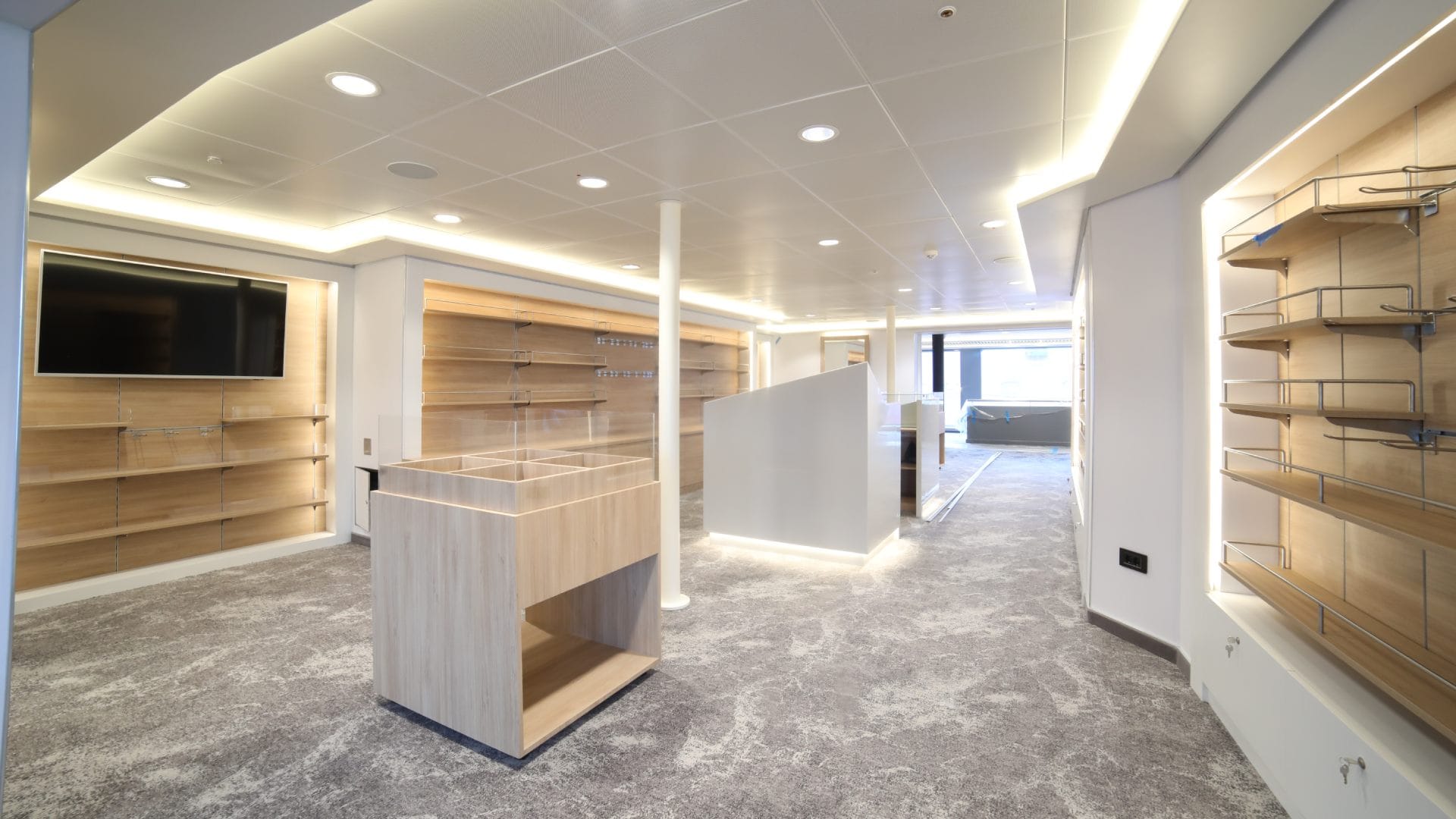
Wood and wood-based products appear in both visible finishes and concealed furniture components. Common applications include wardrobes, bed units, desks, tables, shelving, cabinets, decorative panels and storage systems. Veneers can create a natural appearance while allowing the core material to be selected for weight, fire performance or dimensional stability.
In marine furniture, the full build-up matters. A certified decorative veneer does not establish the performance of the substrate, adhesive, edge treatment, coating or completed item. Project teams should evaluate these elements together, particularly where fire behaviour, moisture exposure, cleanability or impact resistance is critical.
Bespoke joinery introduces further complexity because a single item may combine several wood species, veneers, panels and finishes. Early coordination between design, procurement and production helps define which components require an FSC claim and prevents uncertified substitutions from entering the approved material schedule. Cita’s bespoke joinery capabilities show how cabinetry, panelling and custom interior elements are developed around vessel-specific requirements.
FSC Certification Does Not Replace Marine Compliance
FSC certification and marine technical compliance answer different questions. FSC addresses responsible forest management and the traceability of forest-based materials. It does not, by itself, demonstrate that a material is suitable for installation onboard a vessel.
Depending on the vessel, location and contract, timber, panels, veneers or completed interior elements may also need to meet requirements concerning:
- fire performance and smoke characteristics;
- moisture resistance and dimensional stability;
- structural strength and fixing methods;
- weight targets;
- coating, adhesive and surface-treatment compatibility;
- IMO, SOLAS, flag-state or classification requirements; and
- shipyard specifications and approved material schedules.
The required evidence should be defined for the intended application. A product that is suitable for decorative joinery in one area may not be acceptable in an escape route, accommodation space or another location with different fire-safety requirements. Likewise, a valid marine approval does not establish responsible forest sourcing. Both sets of requirements need to be checked separately.
Integrating FSC Requirements into Design and Production
Responsible sourcing works best when it is included in the project specification before procurement begins. The design team should identify the components containing forest-based material, the exact FSC claim required and whether the finished product itself must be supplied with an FSC claim. The procurement and production teams can then confirm availability, lead times, certification scope and documentation before purchase orders are released.
This coordination should continue through manufacturing. Accurate bills of materials, controlled storage, material identification and documented substitutions help preserve traceability. Efficient nesting and cutting plans can also reduce offcuts, while modular design and production-ready detailing can limit rework. These controls connect responsible sourcing with the practical benefits of consistent manufacturing.
For series production or sister vessels, approved material references should be locked and monitored across each hull. If a veneer, panel or supplier becomes unavailable, the replacement should be reviewed for both marine suitability and the required FSC claim before it is accepted. Cita’s development and production approach brings technical development, material planning and manufacturing into the same project workflow.
How to Verify FSC-Certified Wood Before Procurement
 1. Define the product precisely
 1. Define the product precisely
Record the manufacturer, product reference, species or panel type, finish and intended onboard use. A generic description such as “certified plywood” is not sufficient for technical or sustainability review.
2. State the required FSC claim
Confirm whether the specification requires FSC 100%, FSC Recycled or FSC Mix and whether the requirement applies to the raw material, a component or the finished product. Avoid assuming that every FSC label represents the same composition.
3. Verify the supplier’s certificate
Use the official FSC certificate search to check that the supplier’s certificate is valid and that its scope is relevant to the product and activity involved. The organisation named on the certificate should correspond with the organisation selling the claimed product.
4. Check transaction documents
Where an FSC claim is required, review the invoice or delivery documentation for the supplier’s certification code, the correct product description and the applicable FSC claim. A separate certificate alone does not prove that a particular delivery was sold with an FSC claim.
5. Control substitutions and mixed-material items
If the supplier, panel, veneer or wood species changes, repeat the sustainability and technical checks. For a finished furniture item containing multiple materials, clarify which components fall within the FSC claim and do not imply that unrelated materials are certified.
6. Verify marine suitability separately
Review the fire, moisture, durability, structural and other project-specific evidence required for the installation area. The procurement file should demonstrate both responsible sourcing and technical suitability rather than treating one as proof of the other.
Newbuild and Refit Considerations
In a newbuild project, FSC requirements can be incorporated into the material specification, approved supplier list and documentation schedule from the start. This gives teams more time to compare products, secure supply and align certificates with production milestones.
Refit projects may require a more flexible approach. Existing veneers or furniture may need to be matched, yet the original product may be unavailable or poorly documented. A proposed FSC-certified alternative still needs to be checked for colour, grain, thickness, fire performance, compatibility with the existing construction and installation conditions. Survey findings and sample approval are therefore important before production begins.
In both cases, late substitutions are a common risk. The project team should agree who has authority to approve alternatives and what evidence must accompany each request.
A More Reliable Approach to Sustainable Marine Interiors
FSC-certified wood can improve transparency in the procurement of furniture, panels and bespoke joinery, but its value depends on how accurately the requirement is specified and verified. The strongest approach connects responsible sourcing with material performance, production planning and onboard installation.
For shipyards and owners, this means asking more than whether a material is “sustainable.” The useful questions are which FSC claim applies, whether the seller can pass that claim to the project, how the material will be controlled during manufacturing and whether the completed interior remains suitable for its marine environment.
Cita supports yacht and ship interior projects through coordinated material planning, furniture production and bespoke joinery. To assess FSC-related requirements together with marine performance, documentation and project delivery, contact Cita during the specification or procurement stage.
Frequently Asked Questions
What does FSC-certified wood mean?
It refers to forest-based material supplied under the Forest Stewardship Council certification system with an applicable FSC claim. The exact meaning depends on whether the product is identified as FSC 100%, FSC Recycled or FSC Mix.
Is FSC-certified wood automatically suitable for marine use?
No. FSC certification addresses forest sourcing and supply-chain traceability. Fire performance, moisture resistance, durability, structural requirements and other vessel-specific criteria must be assessed separately.
Does using FSC-certified board make the finished furniture FSC certified?
Not automatically. If the finished product is to be sold with an FSC claim, the relevant organisation, certification scope, production controls and transaction documentation must support that claim.
How can a buyer verify an FSC claim?
Check the supplier’s current certificate and scope in the FSC public database, then confirm that the relevant sales or delivery documents identify the product and carry the correct FSC claim and certification code.
Should FSC requirements be reviewed after a material substitution?
Yes. A visually or technically similar replacement does not automatically have the same certification status. Both the FSC claim and marine technical evidence should be reviewed again.