The Best Apps for Sailors
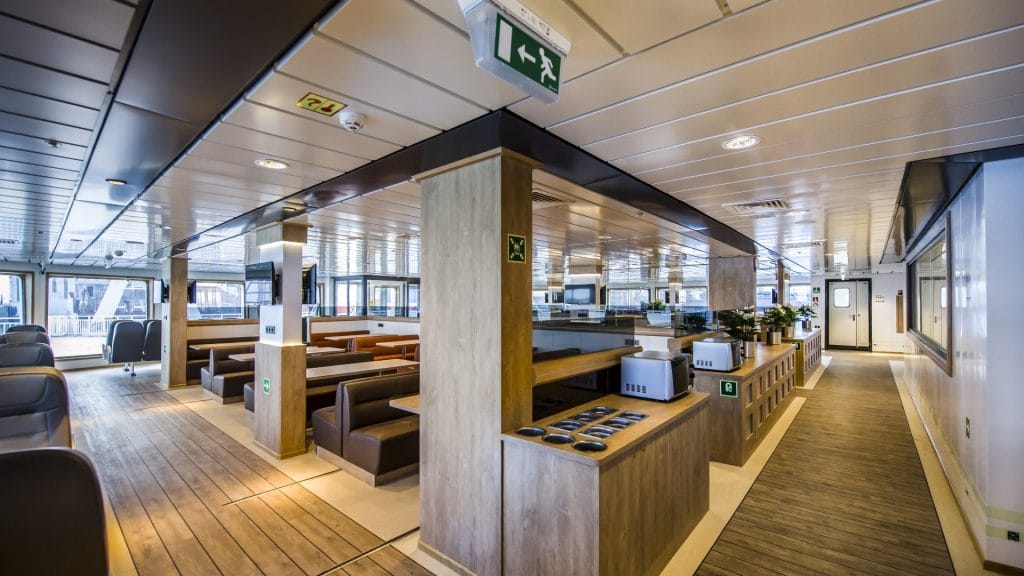


Plywood is widely used in yacht and ship interiors because it combines strength, dimensional stability and design flexibility. It can form the substrate for cabin furniture, wardrobes, wall panels, storage systems, desks and bespoke joinery, while remaining compatible with veneers, laminates and other decorative finishes.
For shipowners, shipyards, designers and marine furniture manufacturers, technical performance is only one part of the purchasing decision. The origin of the timber, the credibility of the supply chain and the availability of supporting documentation are increasingly important as marine projects adopt more responsible procurement policies.
FSC and PEFC are two internationally recognised forest certification systems that can support this process. They address responsible forest management and the traceability of forest-based materials. They do not, by themselves, prove that a plywood product is suitable for a particular vessel, interior location or marine approval requirement. Sustainable sourcing and marine performance must therefore be assessed together, while keeping their purposes separate.
What Is Sustainable Marine Plywood?
“Sustainable marine plywood” is not the name of one universal certification. The term generally describes plywood selected for a marine application with responsible timber sourcing, traceability and efficient material use considered alongside the product’s technical performance.
A sound specification should answer two different questions. First, does the plywood meet the requirements of the intended furniture or interior application? Second, can the supplier provide credible evidence for the requested FSC, PEFC or other responsible-sourcing claim? One answer cannot replace the other.
Sustainability also depends on how efficiently the plywood is processed, how much waste is generated during cutting, how long the finished furniture remains in service and whether components can be repaired or replaced. Certification is an important procurement tool, but it is part of a wider material and lifecycle assessment.
What Is FSC Certification?
FSC stands for the Forest Stewardship Council. Its system supports responsible forest management and provides a framework for tracing forest-based materials through the supply chain.
For plywood procurement, the relevant concept is often FSC Chain of Custody certification. It is intended to verify that eligible certified material is identified and tracked as it moves through sourcing, manufacturing and distribution. Companies must maintain records and controls that support the FSC claim made for a product or sale.
An FSC claim does not mean that FSC has tested a plywood panel for water resistance, bonding quality, dimensional stability, fire performance or onboard durability. Those characteristics must be verified separately against the project specification. FSC certification can support the sourcing and traceability part of the decision, not the complete marine approval process.
What Is PEFC Certification?
PEFC stands for the Programme for the Endorsement of Forest Certification. Like FSC, PEFC provides a framework for sustainable forest management and Chain of Custody controls for forest and tree-based products.
PEFC Chain of Custody documentation can help organisations communicate verifiable information about the origin of forest-based material. Depending on the applicable claim and standard, the system can include material from certified sustainably managed forests, recycled sources and controlled sources.
For marine plywood buyers, a PEFC claim can provide useful evidence about sourcing and traceability when it is supported by the correct supplier documentation. It still does not determine whether the plywood meets the technical requirements of a yacht or ship interior. Moisture behaviour, bonding, fire performance, weight and construction suitability remain separate checks.
FSC and PEFC: What Is the Difference?
FSC and PEFC are separate certification systems with different governance models, standards and certification structures. Both can help project teams move beyond general statements such as “eco-friendly timber” by introducing documented sourcing and traceability requirements.
The practical procurement question is not always which system is universally better. It is usually which claim is required by the owner, shipyard or project specification, and whether the exact plywood product can be supplied with evidence that supports that claim.
A project may require FSC-certified material, PEFC-certified material or accept either option. The decision should follow the written specification and the supplier’s documentation. FSC and PEFC claims should not be treated as interchangeable without confirming that the project allows this and that the exact product is covered.
Why Do FSC and PEFC Matter for Marine Plywood?
Marine interiors can contain substantial volumes of plywood across cabins, public areas, crew spaces, furniture and joinery. Responsible sourcing requirements therefore affect more than the visible wood finish. They can apply to the concealed substrate that determines the strength, weight, machining behaviour and service life of the finished component.
Responsible Timber Sourcing
FSC and PEFC give procurement teams a structured way to evaluate responsible forest-based materials. This is more reliable than accepting a generic supplier description without checking the scope of the claim, the certificate holder or the product reference.
For owners and shipyards with sustainability policies, a documented certification claim can make material approvals and project reporting more consistent. The claim should still be matched to the product being purchased rather than to a supplier’s general company statement.
Supply Chain Traceability
Plywood may pass through a forest product supplier, veneer or panel manufacturer, distributor and marine furniture producer before it reaches the vessel. Chain of Custody controls help preserve information about certified material as it moves between these organisations.
Traceability becomes especially important when a project involves repeated cabin furniture, multiple subcontractors or material substitutions. If the plywood supplier, product reference or manufacturing route changes, the sustainability documentation should be reviewed again before the replacement is approved.
Better Procurement Documentation
Sustainability claims need to be verifiable. Before releasing plywood for production, the procurement team should review the supplier’s certificate, certification scope, product reference and the claim shown on relevant sales or delivery documents.
This simple check reduces the risk of accepting a certification statement that applies to another product, another site or another part of the supplier’s business. It also creates a clearer record for owner approvals, audits and project handover documentation.
Where Is Marine Plywood Used in Ship Interiors?
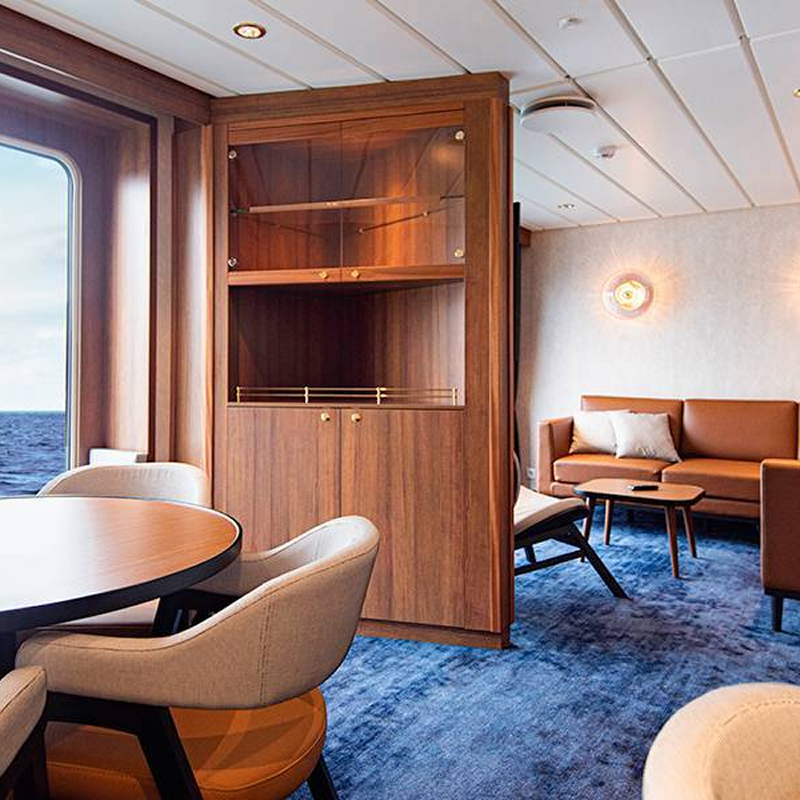
Marine plywood can be used as a stable substrate for cabin furniture, wardrobes, bed structures, desks, tables, storage units, wall panels and custom joinery. In many applications it is covered by a veneer, laminate, paint or another decorative finish, so the plywood itself may not be visible after installation.
Its concealed position does not make the specification less important. The substrate influences the finished component’s weight, machining accuracy, fastener performance, dimensional stability and resistance to the conditions expected onboard. Responsible sourcing requirements should therefore be considered at the substrate level, not only on the decorative timber that passengers or crew can see.
Sustainable Marine Plywood in Furniture Production

Marine furniture is exposed to conditions that are more demanding than those found in many residential applications. Humidity, vibration, intensive daily use, cleaning routines, temperature changes and limited access for repair can all affect the long-term performance of a component.
The plywood must be selected for the actual furniture construction and vessel environment. A responsibly sourced panel that fails the project’s bonding, moisture, fire or durability requirements is not a suitable substitute simply because it carries an FSC or PEFC claim. The most dependable process integrates environmental credentials with engineering, approval and production requirements from the start.
This approach is consistent with Cita’s Development and Production service, which describes marine furniture production around durability, safety and functionality. Cita’s published sustainability approach also refers to FSC-certified wood, material optimisation and waste-reduction measures. Project-specific certification and product documentation should still be confirmed for each order.
Sustainable Plywood in Bespoke Marine Joinery
Plywood is frequently used in bespoke cabinetry, wall panelling and furniture components because it can be machined accurately and combined with different decorative finishes. Custom work also involves more design changes and material decisions than a standard catalogue product.
A different plywood supplier may be proposed because of availability, lead time, thickness, surface quality or a late project revision. When FSC or PEFC certification is part of the specification, every substitution should trigger a new documentation review. The replacement must satisfy both the required certification claim and the technical requirements of the original design.
Cita’s Bespoke Joinery service covers vessel-specific cabinetry, panelling and marine woodwork. Its published approach combines custom fabrication with marine-grade materials selected for the expected moisture, wear and operational conditions.
FSC and PEFC Certification Do Not Replace Marine Requirements
This distinction is essential for avoiding approval and procurement errors. FSC and PEFC answer questions about responsible forest sourcing and traceability, while marine specifications answer questions about performance in the vessel environment.
Depending on the application, the plywood may need to be assessed for moisture resistance, adhesive and bonding quality, dimensional stability, durability, fire behaviour, weight, surface treatment and compatibility with the furniture construction. The project may also refer to IMO, SOLAS, flag-state, classification society or shipyard requirements.
A plywood product can therefore be responsibly sourced but technically unsuitable for a particular onboard location. The reverse is also possible: a technically suitable panel may not meet the project’s FSC or PEFC sourcing requirement. Both areas should be verified independently before production begins.
How to Specify Sustainable Marine Plywood
A clear specification prevents the phrase “sustainable marine plywood” from becoming too vague during procurement. The document should identify the plywood construction, thickness, application, performance characteristics and required forest certification claim.
A practical review should include the following checks:
- Confirm the exact plywood manufacturer, product reference and manufacturing site.
- State whether FSC, PEFC or either certification is acceptable for the project.
- Verify the supplier’s certificate, scope and validity before approval.
- Check that the required claim appears on applicable invoices and delivery documents.
- Confirm the plywood’s marine and furniture performance separately.
- Review both certification and technical data if a supplier or product is substituted.
- Maintain the relevant records throughout manufacturing, delivery and installation.
This process helps prevent two common mistakes: accepting a broad sustainability statement without evidence, or selecting a certified product without checking whether it works within the vessel’s technical system.
Chain of Custody in Marine Interior Projects
Chain of Custody becomes more important as plywood moves through several organisations before installation. A typical route may include the panel manufacturer, distributor, marine furniture manufacturer and interior outfitting contractor.
When a formal FSC or PEFC claim is required for the furniture or project, the relevant controls must be considered throughout this chain. The objective is not simply to buy material that once originated from a certified source. It is to maintain a credible link between the claim, the exact product and the organisations handling it.
Documentation and supplier selection should therefore be coordinated early. Waiting until furniture has been produced to request certification evidence can create avoidable rework, replacement and approval risks.
Sustainable Plywood and Material Efficiency
Certification is only one part of responsible material use. Plywood cutting can generate offcuts, particularly when furniture components are produced in small batches or late design changes require new parts. Accurate engineering, CNC-supported manufacturing and optimised cutting layouts can improve material utilisation.
Modular design can reduce unnecessary variation between components and make production more repeatable. Longer product life matters as well: frequent replacement can increase material consumption even when the original plywood was responsibly sourced. Durability, repairability and maintainability should therefore be included in the wider sustainability strategy.
Cita’s published production approach refers to smart material optimisation, energy-efficient processes and marine furniture designed for durability and long-term onboard use. These measures complement, but do not replace, the need to verify the certification claim for the plywood selected for a specific project.
Sustainable Marine Plywood in Newbuild Projects
Newbuild projects offer the best opportunity to define sourcing requirements before procurement and production are underway. Owners and shipyards can specify FSC or PEFC requirements alongside furniture engineering, technical approvals and material schedules.
Early approval is especially valuable when a project includes large quantities of identical cabin furniture. One plywood specification may affect hundreds of repeated components, so a late change can disrupt purchasing, production sequencing and installation planning.
Sustainable Marine Plywood in Refit Projects
Refit projects often require existing furniture to be repaired, replaced or reproduced while preserving the original appearance. The original plywood specification may be unavailable, or the former supplier may no longer offer the same product.
Certified plywood can support a wider sustainability objective in this situation, but it must remain compatible with the existing construction, decorative finish and technical requirements. The goal is not to replace an old panel with any FSC- or PEFC-certified alternative. It is to select a documented material that works correctly within the existing marine interior system.
Cita’s Marine Outfitting service covers newbuild and refit scopes, including custom joinery, modular furniture, project coordination and onboard installation. The required certification and technical evidence should be defined with the project team before the replacement material is released for production.
How Cita Approaches Sustainable Wood Materials
Cita connects responsible sourcing with marine furniture manufacturing instead of treating sustainability as an isolated label. Its Sustainability page describes the use of environmentally responsible and certified suppliers, while the Development and Production page specifically refers to FSC-certified wood, recyclable aluminium, material optimisation and waste reduction.
This published information supports the use of FSC-certified forest-based materials where the relevant project documentation confirms the claim. PEFC should be treated as a project-specific option unless the supplied material and Cita’s documentation confirm that the required PEFC claim applies.
For shipowners, shipyards and designers, the practical benefit is a coordinated review of sourcing, engineering and production. The final material decision should remain based on the written project specification and the evidence available for the exact plywood product.
Building a More Sustainable Marine Interior
A sustainable yacht or ship interior cannot be created through one certificate alone. Responsible forest sourcing is important, but the wider environmental impact also depends on efficient manufacturing, product lifespan, maintenance, repairability, logistics and waste management.
Sustainable marine plywood can contribute to this broader strategy when responsible sourcing is combined with appropriate marine performance. FSC and PEFC provide useful frameworks for tracing forest-based materials, while technical specifications help ensure that the selected plywood remains suitable for the vessel environment.
Bringing these requirements together early allows shipowners, shipyards and interior manufacturers to make choices that support operational reliability and responsible resource use. For marine furniture and bespoke joinery, this integrated process is more useful than treating certification, sustainability and technical performance as separate decisions.
Frequently Asked Questions
What is sustainable marine plywood?
Sustainable marine plywood generally refers to plywood selected for a marine application while considering responsible timber sourcing, traceability, efficient material use and environmental impact alongside technical performance.
Is FSC-certified plywood the same as marine plywood?
No. FSC certification relates to responsible forest-based material sourcing and Chain of Custody. Marine plywood is selected or manufactured according to the technical requirements of a marine or moisture-demanding application. A product may need to satisfy both sets of requirements separately.
What is PEFC-certified plywood?
PEFC-certified plywood is supplied with an eligible PEFC claim through a certified supply chain. The claim supports traceability and responsible sourcing, but it does not by itself prove that the plywood is suitable for a specific vessel or furniture application.
Is FSC better than PEFC for marine plywood?
Neither system should automatically be treated as universally better. The correct choice depends on the project specification, the owner’s sustainability policy, supplier availability and the certification claim required for the material.
Does FSC or PEFC certification prove that plywood is suitable for ships?
No. These systems focus on forest sourcing and traceability. Marine suitability must be evaluated separately against the vessel’s technical, fire-safety, class, flag-state and shipyard requirements.
Can FSC- or PEFC-certified plywood be used in marine furniture?
Yes, provided that the plywood also meets the technical requirements of the intended furniture or interior application and the certification claim is supported by the correct documentation.
Should certification be rechecked when plywood is substituted?
Yes. A new supplier or product may have a different certification status, Chain of Custody scope or technical specification. Both sustainability and marine requirements should be reviewed before the substitute is approved.