Çita Marine Successfully Completes Interior Outfitting for NB68 CECON VIGOR
The Difference Between Fixed and Loose Furniture in Ship Interiors
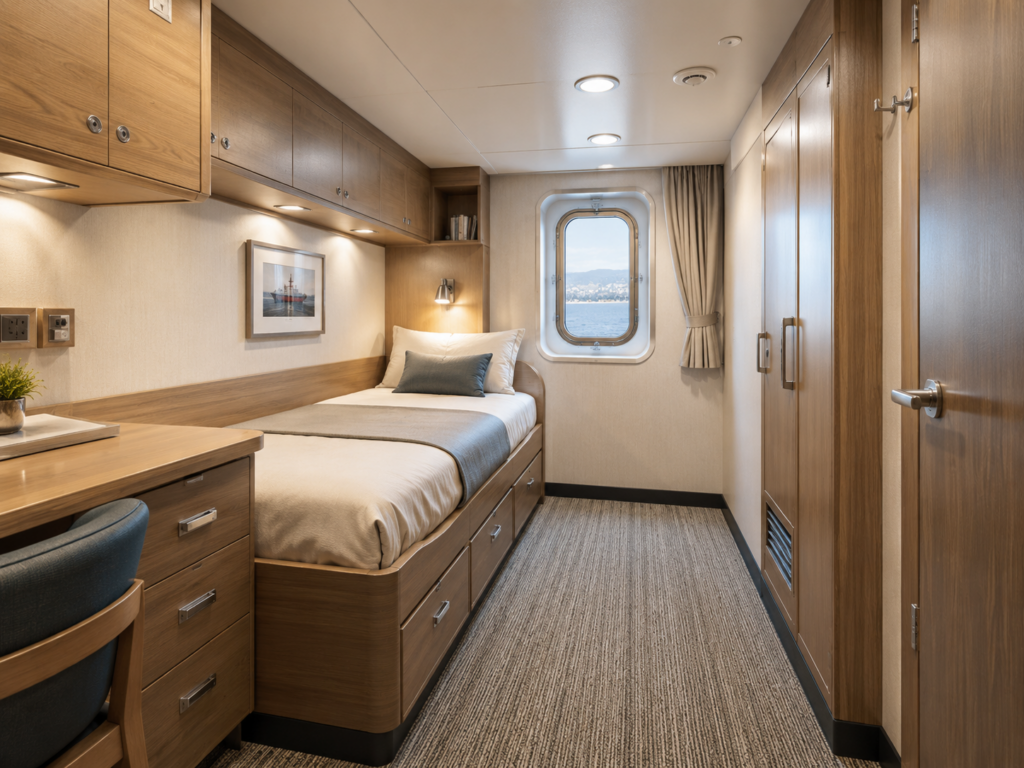


Increasing the storage space of narrow ship cabins requires more than adding extra drawers or shelves. Ship cabins are compact, technical and highly controlled interior areas where every centimeter affects comfort, access, safety and maintenance. A successful cabin layout needs to use hidden zones, vertical surfaces, bed structures, wall modules and built-in furniture as part of a single interior system.
In maritime projects, storage planning must be evaluated together with marine furniture, circulation routes, fire safety criteria, cleaning routines, weight control and installation details. A cabin may appear small on the plan, yet a well-designed furniture system can create significantly more usable volume without making the space feel crowded.
Cita Marine develops cabin interiors through custom production, project planning, 2D and 3D design development, bespoke joinery, assembly support and on-site installation. For narrow ship cabins, storage efficiency begins at the design stage and continues through production accuracy and installation quality.
Why Narrow Ship Cabins Need a Different Storage Strategy
Standard storage solutions rarely work well in narrow ship cabins. Land-based furniture dimensions are often too deep, too heavy or too difficult to install inside vessel interiors. A wardrobe, bedside unit or luggage compartment must be adapted to the cabin width, ceiling height, wall angle, ventilation routes and maintenance access points.
In a narrow cabin, poorly planned furniture can block movement, reduce usable floor area and make daily routines harder for passengers or crew. A better approach is to design storage around the way the cabin is used. Sleeping, dressing, luggage placement, device charging, cleaning and emergency access should all be reviewed before the furniture layout is finalized.
Storage space in narrow ship cabins should be created through integrated planning, not through separate furniture pieces placed after the interior design is completed.
For project teams, the goal is not only to increase the number of compartments. The goal is to create storage that remains accessible, safe and easy to maintain during real vessel operation.
Built-In Furniture as the Core of Cabin Storage
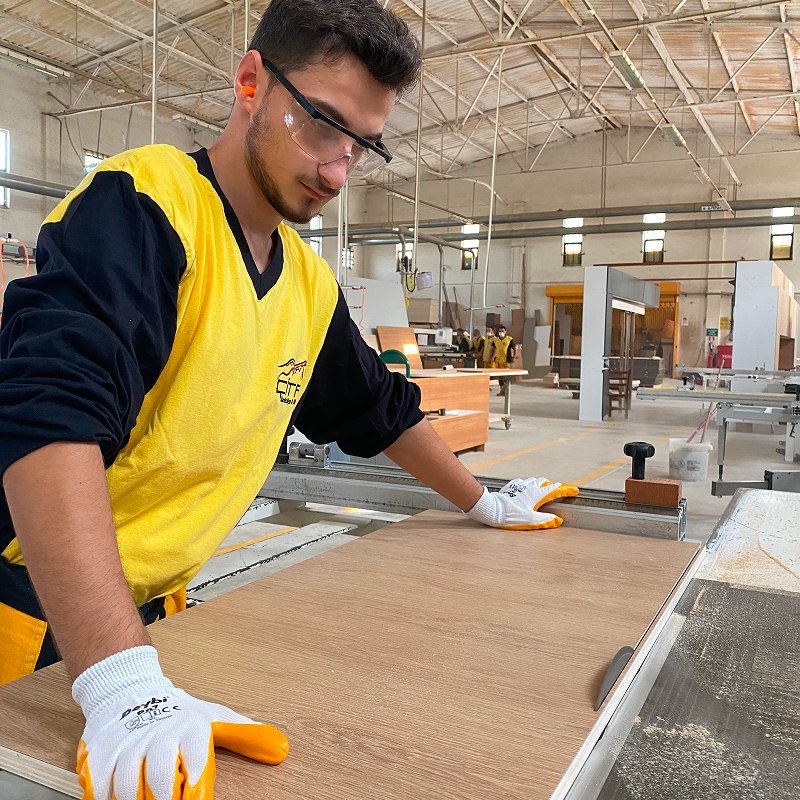
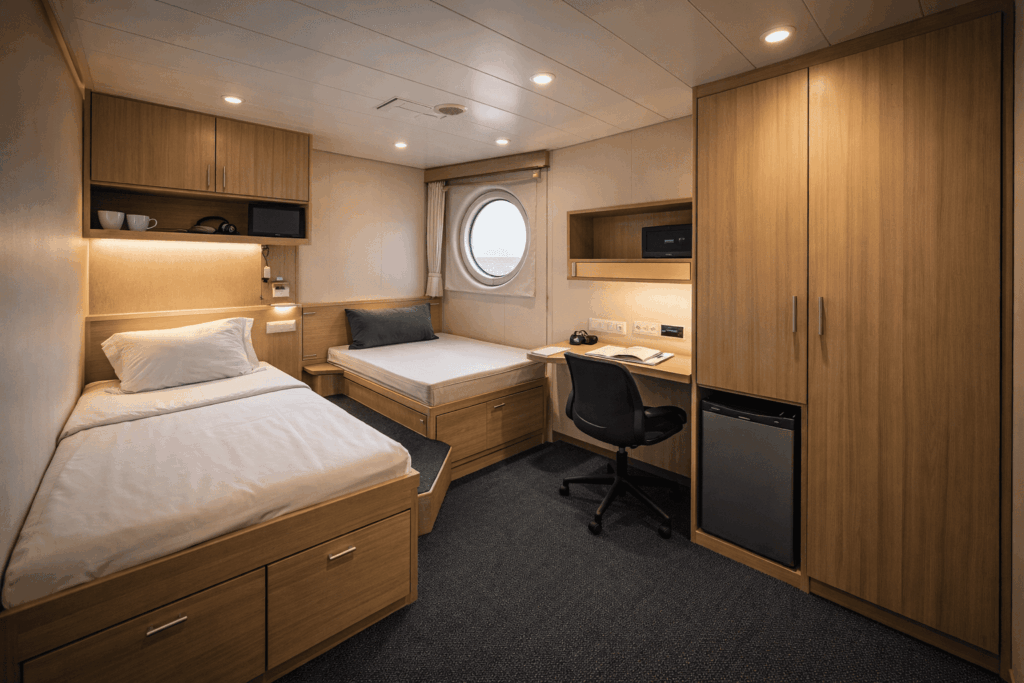
Built-in furniture is one of the most effective ways to increase storage capacity in narrow cabins. Bed bases, headboards, wall units, wardrobes, desks and seating elements can all be designed with concealed storage volumes.
A bed base may include under-bed drawers or lift-up compartments. A headboard can integrate shallow shelves, reading lights, electrical access and small personal storage. Wall-mounted modules can reduce the need for freestanding furniture, keeping the floor area clearer.
Cita Marine’s marine furniture work covers fixed and loose furniture for vessel interiors. In narrow cabins, marine fixed furniture is often the more efficient option because it can be produced according to exact project dimensions and installed securely inside the cabin structure.
Built-in furniture supports:
- Better use of wall-to-wall dimensions
- Reduced unused gaps between furniture and structure
- Safer installation under vessel movement
- Cleaner visual continuity
- More controlled weight distribution
- Easier coordination with lighting, sockets and panels
When designed correctly, built-in storage can make a compact cabin feel more organized without reducing comfort.
Using Vertical Space Without Overloading the Cabin
Narrow cabins usually have limited floor area, which makes vertical planning critical. Storage should not rely only on low cabinets or floor-standing units. Overhead compartments, high wall shelves, tall wardrobes and integrated wall panels can create additional storage capacity without narrowing the circulation route.
The challenge is balance. If upper units are too deep or visually heavy, the cabin may feel compressed. If they are too shallow, storage capacity may remain limited. The best solution depends on cabin height, berth position, lighting plan and passenger movement.
Vertical storage should be planned with depth control, access height and visual lightness in mind.
Open shelves may work for certain items, yet closed compartments are often more suitable in vessel interiors because they keep belongings secure during movement. Soft-close hardware, secure locking details and marine-grade connection systems help maintain safety and usability.
For projects that require early layout analysis, Cita Marine’s consulting and planning process helps cabin furniture decisions align with the overall interior concept and technical requirements.
Multi-Functional Furniture for Compact Cabins
Multi-functional furniture can reduce the number of separate pieces inside the cabin. A bench may work as seating and luggage storage. A desk may include concealed compartments. A wardrobe panel may integrate a mirror, charging point or service access. A bed structure may combine sleeping, storage and technical clearance.
In narrow ship cabins, every furniture element should serve a clear function. Some elements can serve more than one function when designed with accurate measurements and suitable hardware.
Examples of multi-functional cabin furniture include:
- Bed bases with under-bed storage
- Foldable or compact desks
- Seating units with storage below
- Wardrobes with luggage zones
- Headboards with integrated shelves
- Wall panels with concealed access points
- Mirror panels combined with cabinet doors
Multi-functional marine furniture helps increase usable storage without filling the cabin with additional objects.
In passenger cabins, this improves comfort and order. In crew cabins, it supports daily routines and long-term usability. In commercial vessels, repeatable furniture modules can make production and installation more efficient across multiple cabins.
Reducing Dead Space Around Beds, Walls and Corners
Dead space is one of the biggest storage losses in narrow cabins. Small gaps beside beds, unused wall recesses, empty corners and oversized clearance zones can reduce the true potential of the cabin.
During design development, these areas should be identified before production begins. A shallow side cabinet, angled shelf, overhead unit or custom wall module may turn unused space into functional storage. The dimensions must remain realistic. Overfilling every gap can harm comfort and make maintenance harder.
Cita Marine’s development and production capabilities allow custom furniture parts to be produced according to vessel-specific measurements. This is critical for cabin projects where standard modules may leave unnecessary gaps.
A strong storage strategy reviews:
- Wall recesses
- Under-bed zones
- Corners near cabin doors
- Space above desks or seating
- Wardrobe upper sections
- Narrow gaps beside fixed furniture
- Luggage placement areas
The most efficient cabin storage solutions often come from small, repeated improvements rather than one large furniture element.
Marine Joinery for Precise Cabin Integration
Narrow cabin interiors require precise joinery. A few millimeters can affect door movement, drawer access, panel alignment and installation quality. For this reason, marine joinery has a direct role in storage performance.
Custom joinery allows furniture to follow wall angles, ceiling heights and technical restrictions. It can create curved panels, concealed compartments, integrated lighting zones and clean transitions between furniture and wall surfaces.
Cita Marine’s bespoke joinery experience supports cabin interiors where standard furniture cannot meet spatial or technical requirements. For narrow cabins, joinery accuracy is closely connected to storage efficiency, user comfort and final appearance.
Accessibility, Safety and Maintenance
Storage capacity should never reduce safety or maintenance access. A cabin with many compartments may still fail if panels are difficult to open, emergency routes are restricted or service points become inaccessible.
Cabin furniture should be reviewed for:
- Door and drawer opening clearance
- Access to technical panels
- Cleaning around furniture bases
- Secure closing systems
- Edge safety
- Weight distribution
- Fire-rated material compatibility
- Long-term repair access
In ship interiors, storage planning is successful when capacity, safety and maintenance remain in balance.
Assembly quality plays a strong role at this stage. Through assembly support, custom cabin furniture components can be installed in line with project drawings and site requirements. Proper installation protects the storage strategy developed during design and production.
Practical Cabin Storage Principles for Project Teams
For shipyards, interior designers and project owners, storage planning should begin before furniture drawings are finalized. A narrow cabin should be evaluated as a complete interior system rather than a room filled with separate furniture.
Project teams can follow these principles:
- Plan storage from the earliest design stage
- Use built-in furniture wherever dimensions are tight
- Keep circulation routes clear
- Use vertical surfaces with controlled depth
- Combine functions in single furniture elements
- Avoid unnecessary gaps between fixed units and structure
- Maintain access to technical and service points
- Use marine-grade materials and secure hardware
- Coordinate production drawings with installation teams
These principles help increase storage capacity while protecting the comfort and safety of the cabin.
Smarter Storage for Long-Term Cabin Performance
The storage space of narrow ship cabins can be increased through careful planning, custom furniture, marine-grade materials and precise installation. The strongest results come from treating beds, walls, corners, wardrobes and overhead areas as parts of one integrated cabin system.
Cita Marine brings marine furniture and marine outfitting expertise together with design development, bespoke joinery, production, logistics and installation support. For ship cabin projects that require efficient storage planning and custom interior solutions, project teams can contact Cita Marine through the contact page.