
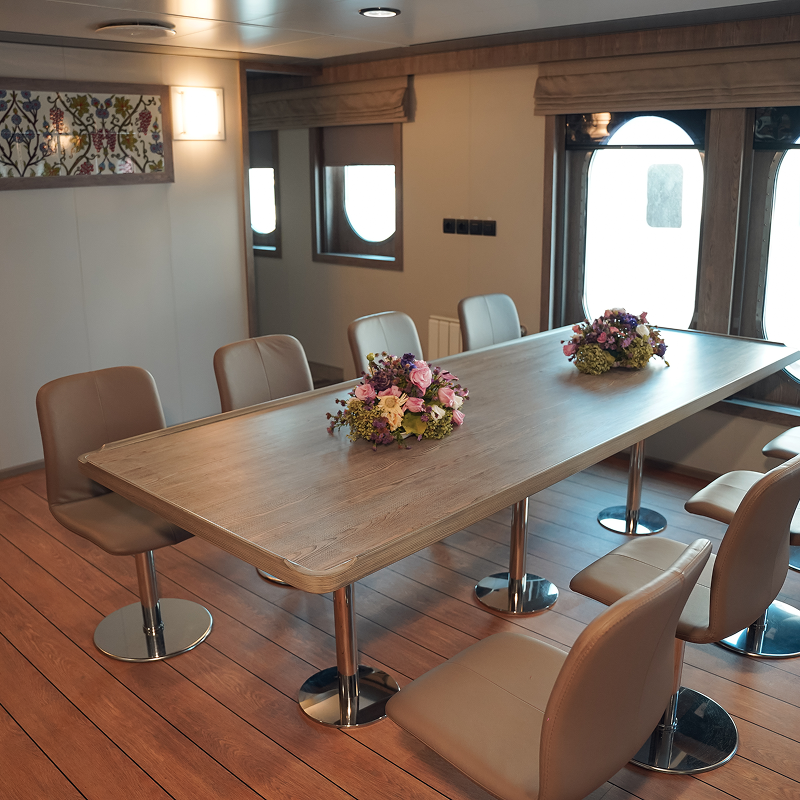
CITA Marine Completes Marine Furniture Production for SKAGASTØL (NB1130)



Materials used in shipbuilding must perform reliably in environments affected by structural loads, vibration, moisture, corrosion, fire risk and continuous operation. For this reason, some materials and components must be assessed under the rules of the classification society responsible for the vessel.
Shipyards, designers, procurement teams and marine interior contractors often use the phrase “class-approved material” as a general description. In practice, approval can refer to a manufacturer, a production process, a material grade, a product type or an individual delivery. The applicable requirement depends on the vessel, the classification society, the material and its intended use.
This distinction matters because not every product installed onboard requires classification approval, and classification approval is not the same as IMO, SOLAS or MED Wheelmark conformity. A clear understanding of the approval scope helps project teams request the correct certificates, avoid unsuitable substitutions and keep technical documentation under control.
What Is a Classification Society?
A classification society is an independent technical organisation that develops and applies rules for the design, construction and ongoing condition of ships and marine structures. During a newbuild, conversion, repair or major modification, the society reviews relevant documents and carries out surveys to verify that the vessel meets the applicable class rules.
Depending on the project, its work may cover hull structures, materials and welding, machinery, electrical systems, piping, pressure equipment, safety-related components, selected marine equipment and manufacturing processes. Classification societies also maintain requirements for material manufacturers, product certification and type approval.
DNV, Lloyd’s Register, RINA and other societies do not apply one universal approval process to every product. The exact requirement depends on the society’s rules, the vessel type, the product category and the way the material will be installed or operated. A shipbuilding team should therefore evaluate approval against the rules for the specific project rather than treating “class approved” as a blanket label.
What Are Class-Approved Materials?
Class-approved materials are materials, products or components whose manufacturer, production process, design or individual delivery has been assessed according to the requirements of the classification society responsible for the vessel. The assessment may be performed before production, during manufacturing or on the delivered product, depending on the applicable rule.
Approval may apply to a material manufacturer, a manufacturing works, a defined material grade, a standard product design, a component type, a testing procedure or an individual batch. A steel plate for a hull can therefore be subject to a different approval route from a pipe, a composite panel, an adhesive system or a piece of marine equipment.
The most useful procurement question is not simply “Is this material class approved?” It is “Which classification requirement applies to this material or product in this application, and what evidence must accompany the delivery?” This wording makes the required certificate and its scope clearer from the beginning.
Why Are Class-Approved Materials Important in Shipbuilding?
Classification requirements create a structured method for verifying the quality and reliability of materials that can affect the vessel’s safety or operation. They are particularly important when a failure could compromise structural integrity, machinery performance, fire safety or the continuity of essential systems.
Consistent Material Quality
Material properties must remain consistent throughout production. For certain products, approval of the manufacturer verifies that suitable facilities, qualified personnel, testing capabilities, inspection procedures and quality controls are in place.
Manufacturer approval does not mean that every product made by the company is automatically approved for every marine application. The certificate scope still needs to identify the approved product category, grade, manufacturing location and any limitations that apply.
Verification of Technical Properties
Depending on the material and class rule, testing may examine mechanical strength, chemical composition, toughness, welding properties, corrosion resistance, dimensional properties, manufacturing quality or performance under defined operating conditions. The required tests are not identical for steel, aluminium, piping, composite materials or interior products.
The purpose is to connect a technical requirement with measurable evidence. A supplier statement that a product is “marine grade” is not a substitute for the certificate, test report or approval record required by the project specification.
Traceability
Traceability allows the shipyard to connect the material delivered with the manufacturer, production records, test results and certificates. This helps identify undocumented substitutions and confirms that the installed product corresponds to the approved specification.
Good traceability is particularly valuable on projects with multiple subcontractors, repeated components or long production schedules. It also makes final handover documentation easier to complete and review.
Which Shipbuilding Materials May Require Class Approval?
Approval requirements differ between classification societies and vessel types. The following categories commonly fall within class rules, although the project specification must always be checked before procurement.
Structural Steel
Steel remains one of the main materials in commercial shipbuilding. Hull plates, structural sections and higher-strength steels can be subject to requirements for manufacturing, chemical and mechanical properties, testing and certification. The works producing the steel may need approval before the material is supplied for a classed vessel, and certificates may be required for each delivery or batch.
Castings and Forgings
Cast and forged components are used in propulsion systems, shafting, rudder components, machinery parts and structural connections. Since manufacturing conditions can strongly influence their properties, the applicable rules may require both manufacturer approval and product-specific inspection or testing.
Aluminium and Non-Ferrous Materials
Aluminium alloys and other non-ferrous materials are used where low weight, corrosion resistance or specific engineering characteristics are important. Requirements may address the material grade, manufacturing procedure, heat treatment, testing and certification of the supplied product.
Pipes and Tubes
Pipes and tubes carry fuel, water, steam, hydraulic fluid, cooling media and other operational fluids. The service, pressure, temperature and location of the system influence the required material and certification route. Critical piping products may require approved manufacturing, testing and delivery documentation.
Non-Metallic and Composite Materials
Modern vessels use polymers, composites, resins, insulation products, bonding systems and other non-metallic materials. Classification approval is not limited to traditional steel products. The applicable evidence depends heavily on the intended use, such as a structural component, a fire-related system, a bonding application or an interior installation.
Manufacturer Approval and Product Approval
One of the most common procurement errors is assuming that all approval certificates have the same meaning. Manufacturer approval and product approval address different questions and should be reviewed separately.
Manufacturer Approval
Manufacturer approval focuses on the organisation’s ability to produce materials consistently within a defined scope. The assessment may consider the facility, production process, quality controls, personnel, testing equipment, inspection methods and production records.
An approved manufacturer status does not automatically approve every product made at that facility. The buyer must still check whether the exact product, grade, manufacturing site and intended application are covered by the certificate.
Type Approval
Type approval generally evaluates a defined product design or product type. The classification society reviews technical documentation and may conduct or witness tests to confirm that the design meets specified requirements. Products manufactured to that approved design can fall within the certificate, subject to its conditions, validity and scope.
Type approval is useful for standardised products and repeatedly manufactured components. It should not be interpreted as approval for a different design, a different material grade or a different application without checking the certificate.
Individual Product Certification
Some materials and components require inspection or certification of the actual item or batch being delivered. In these cases, manufacturer approval or type approval alone may not be sufficient. Additional testing, inspection or surveyor-witnessed activities may be required before the certificate is issued.
The procurement documents should specify whether the project requires a manufacturer certificate, type approval, works approval, material certificate, individual product certificate or another class-specific procedure.
Type Approval Is Not the Same as a Material Certificate
The terms “type approval”, “class approval” and “material certificate” are sometimes used as if they were interchangeable. They are not.
A type approval certificate normally relates to a defined product design. Manufacturer approval relates to the organisation and its approved production scope. A material or test certificate provides evidence about the specific material or product delivered. The correct document depends on the classification rules and the wording of the vessel specification.
For this reason, a request that simply says “provide class certification” may create confusion. The specification should identify the approval type, applicable rule, product reference and documents required at delivery.
Class Approval Is Not the Same as IMO or MED Approval
Classification rules and statutory requirements can apply to the same shipbuilding project, but they are not identical systems. The International Maritime Organization develops international maritime regulations and codes, including SOLAS requirements. The Marine Equipment Directive provides an EU conformity framework for defined marine equipment within its scope. Classification societies apply their own technical rules to ships and products within the classification process.
A material or component may therefore require class approval, statutory approval, both or neither, depending on its application. Interior products can also be subject to IMO FTP Code requirements, flag Administration rules, shipyard specifications, owner requirements or a combination of these.
The technical specification should state the exact approval route instead of using a broad phrase such as “marine certified”. This prevents a certificate for one regulatory system from being presented as evidence for another.
Do Marine Interior Materials Require Class Approval?
Not every material used in a ship interior requires classification approval. Decorative finishes, furniture boards, upholstery, joinery materials and surface products may instead be controlled by fire-test requirements, SOLAS, MED Wheelmark, flag Administration rules, shipyard specifications, owner standards or applicable class rules.
The requirement becomes more specific when a product forms part of a regulated system, affects fire safety, is supplied as approved equipment or falls within a class rule for the vessel. The project team should establish this during technical planning rather than assuming that every interior material needs the same certificate.
Cita’s Consulting and Planning process connects vessel-specific requirements with material and surface selection, procurement planning and production considerations. This allows the approval route to be reviewed before materials move into manufacturing.
Why Early Approval Checks Matter
Material approval problems become more expensive after production has started. If an incorrectly documented or unsuitable product is discovered during manufacturing or installation, the project may face replacement, re-engineering, repeated testing, additional survey costs, production delays, installation delays and documentation revisions.
Approval requirements should therefore be identified during design development and procurement. Architects, engineers, procurement teams, shipyards, manufacturers and relevant approval authorities need a shared understanding of the required certificate before the purchase order is released.
Early coordination is particularly valuable for large accommodation packages. A single material decision can affect hundreds of cabin components, repeated furniture modules and the installation sequence across several areas of the vessel.
How to Check Class-Approved Materials Before Procurement

A systematic review reduces the risk of relying on an incomplete or incorrectly scoped certificate.
- Identify the vessel’s classification society. Confirm which society and class rules apply. Requirements from DNV, Lloyd’s Register, RINA or another society should not be assumed to be identical.
- Define the exact application. State where and how the product will be used. A material approved for one system or component may not be approved for another.
- Identify the required approval type. Determine whether the project needs manufacturer approval, type approval, works approval, material certification, individual product certification or witnessed testing.
- Check the certificate scope. Review the manufacturer, product name, material grade, approved application, applicable rule, manufacturing location, limitations and validity.
- Verify product identity. Confirm that the material delivered matches the product described in the certificate and technical documentation.
- Review substitutions. If the supplier, product reference or manufacturing site changes, reassess the approval before the replacement is accepted.
- Maintain records through production. Keep certificates, test reports, inspection records and approval correspondence accessible through manufacturing, delivery and installation.
This process turns class approval from a final paperwork exercise into a controlled part of procurement and production.
Class-Approved Materials and Marine Furniture Production
Marine furniture combines substrates, veneers, laminates, adhesives, hardware, finishes and manufacturing processes. Not every component requires a separate classification certificate, but the applicable regulatory, class, shipyard and owner requirements must still be reflected in the material specification.
Cita’s Development and Production service connects engineering and manufacturing with marine-grade material selection, technical drawings and quality checkpoints. Where the vessel specification requires approval for a particular material or component, that requirement should be incorporated into the same workflow as design review, purchasing and production planning.
The certificate for one material should not be interpreted as approval for the complete furniture assembly. A cabinet, panel or modular unit may contain several materials, each with its own technical or fire-performance requirement. The complete construction must be reviewed according to the project’s applicable rules.
Class Requirements in Bespoke Joinery
Custom joinery requires detailed coordination because a single interior element can combine structural substrates, veneers, laminates, metal components, adhesives, hardware and surface finishes. Different requirements may apply to each part, while the finished assembly may need to satisfy additional installation or fire-performance criteria.
Cita’s bespoke joinery capability supports vessel-specific cabinetry, panelling and furniture production. During technical review, the project team should identify which requirements apply to the complete construction and which relate only to individual components. This prevents an approval certificate for one material from being incorrectly presented as approval for the finished joinery unit.
Class-Approved Materials in Newbuild Projects
Newbuild projects offer the best opportunity to integrate class requirements from the beginning. Before purchasing starts, the team can define the applicable classification rules, approved manufacturers, required certificates, testing procedures, documentation format, material identification and survey hold points.
This information can then be included in procurement specifications, approval registers and manufacturing schedules. Early coordination also helps suppliers understand which documents must accompany material deliveries and which changes require renewed approval.
For large accommodation or furniture packages, this approach reduces the risk that an undocumented substitution will affect repeated components or delay installation.
Class Approval in Refit and Conversion Projects
Refit and conversion projects often involve materials installed under older class rules. Original certificates may be difficult to obtain, and replacement products may differ from the materials originally used. A replacement should not be selected solely because its dimensions or technical data appear similar.
The project team may need to confirm whether the existing approval remains acceptable, whether current class rules apply, whether the replacement requires a new approval, whether additional testing is necessary and whether the classification society must review the modification.
Cita’s Marine Outfitting capability covers newbuild and refit scopes by connecting project planning, furniture production, bespoke joinery and onboard installation. The approval and documentation route should be agreed before replacement materials are released for production.
Building Better Material Specifications for Shipbuilding
The statement “Use class-approved materials” is too broad to guide procurement. A stronger specification identifies the classification society, applicable rule or standard, material or product category, required approval type, certificate format, testing or inspection requirements, delivery documents and acceptance criteria.
Clear wording removes ambiguity for suppliers and allows the shipyard to compare offers on the same technical basis. It also makes changes easier to control because the team can see exactly which certificate or product attribute must be reviewed when a substitution is proposed.
Why Class Approval Should Be Part of the Complete Project Workflow
Classification requirements are most effective when they are connected to engineering, procurement, manufacturing, inspection, installation and final documentation from the beginning. Approval should not become a separate administrative task after the product has already been manufactured.
A controlled workflow can follow this sequence: specification, approval review, procurement, manufacturing, inspection, installation and document handover. This structure helps maintain traceability and reduces the risk of an incorrect material entering the vessel.
For marine furniture projects, the same principle applies to technical planning, material selection, production sequencing and onboard execution. When these activities are coordinated, approval requirements remain visible throughout the project instead of appearing as a late-stage obstacle.
Class-Approved Materials and Reliable Shipbuilding
Class-approved materials form an important part of quality assurance where the vessel’s classification rules require them. “Class approved” is not a universal label covering every material installed onboard. The correct approval depends on the classification society, product or material, intended application and vessel specification.
Shipbuilding teams should verify the exact certification requirement before procurement, review the certificate scope carefully and maintain traceability through production and installation. Coordinating approval with engineering, purchasing and manufacturing creates a more predictable process for newbuild, refit and conversion projects.
Frequently Asked Questions About Class-Approved Materials
What are class-approved materials?
Class-approved materials are materials or products whose manufacturer, production process, design or individual delivery has been assessed according to applicable classification society rules for a defined marine application.
Does every material used on a ship need class approval?
No. Requirements depend on the vessel, classification society, product category and intended application. Statutory, fire-safety, owner and shipyard requirements may also apply.
What is manufacturer approval in shipbuilding?
Manufacturer approval verifies that an organisation has the facilities, processes, qualified personnel, quality controls and testing capabilities required to produce materials within a defined classification scope.
What is marine type approval?
Type approval is an assessment of a defined product design against applicable classification or regulatory requirements. Products manufactured to that design may be covered by the certificate subject to its scope, conditions and validity.
Is class approval the same as IMO approval?
No. Classification societies apply class rules, while IMO develops international maritime regulations and codes. A vessel or product may be subject to both systems.
Is class approval the same as MED Wheelmark certification?
No. MED Wheelmark is an EU conformity framework for defined marine equipment. Classification society approval and MED conformity can apply separately or together depending on the product and vessel.
Do marine furniture materials need class approval?
Not all marine furniture materials require class approval. The requirement depends on the material, product, application and vessel specification. SOLAS, the IMO FTP Code, MED, owner and shipyard requirements may also be relevant.
What should be checked on a class approval certificate?
Check the manufacturer, product or material type, approved application, certification scope, applicable rules, manufacturing location, limitations and certificate validity. Confirm that the delivered product matches these details.
Discuss Your Class-Approved Material Requirements with Cita
With 28 years of experience in marine furniture and ship interior projects, Cita supports shipyards, owners and project teams from technical planning and material selection through production and onboard execution. This experience helps connect certification requirements with practical engineering, manufacturing and installation decisions.
For your next newbuild, refit or conversion project, contact Cita to discuss class requirements, material documentation and the most appropriate project workflow for your vessel.